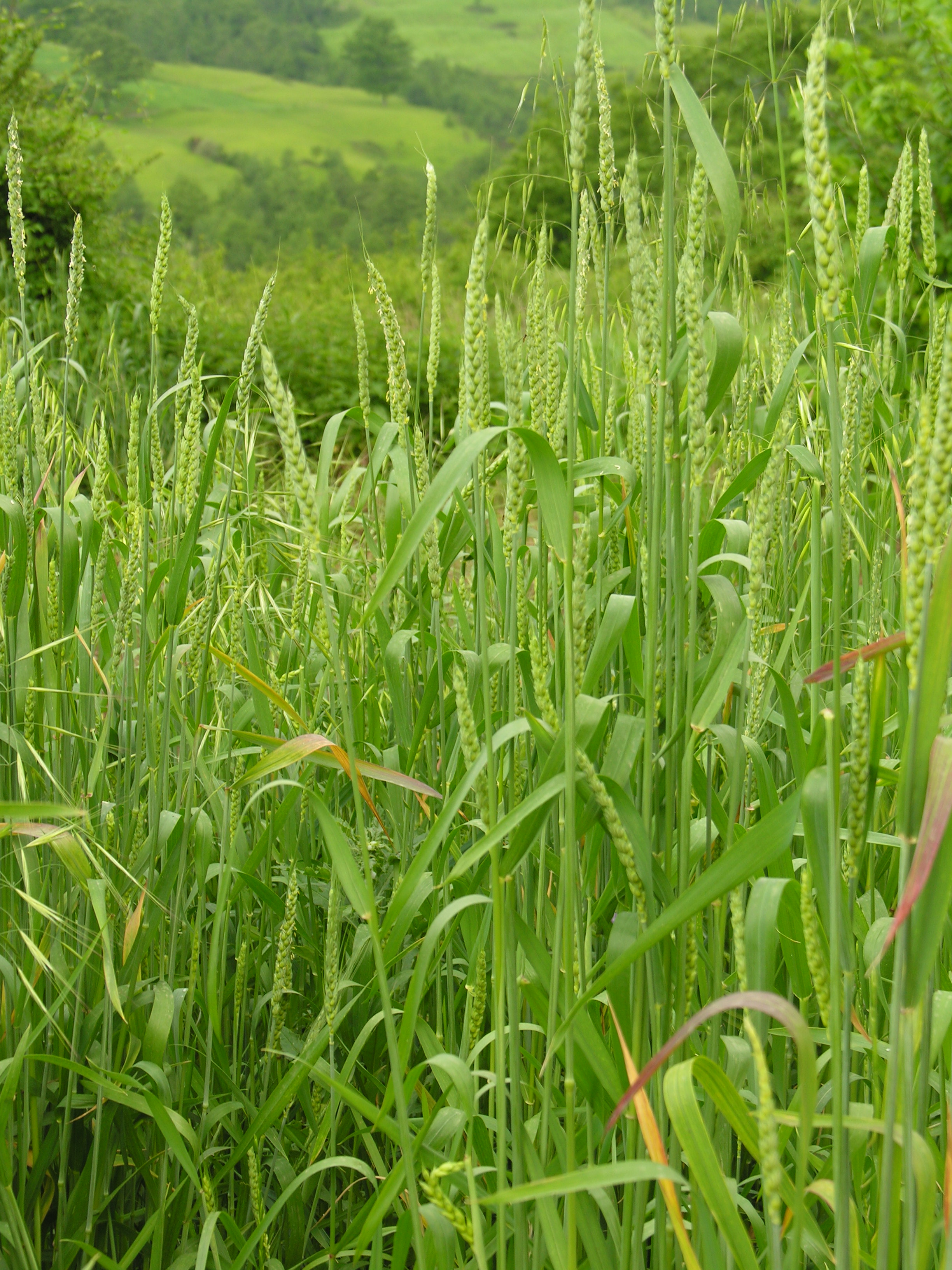
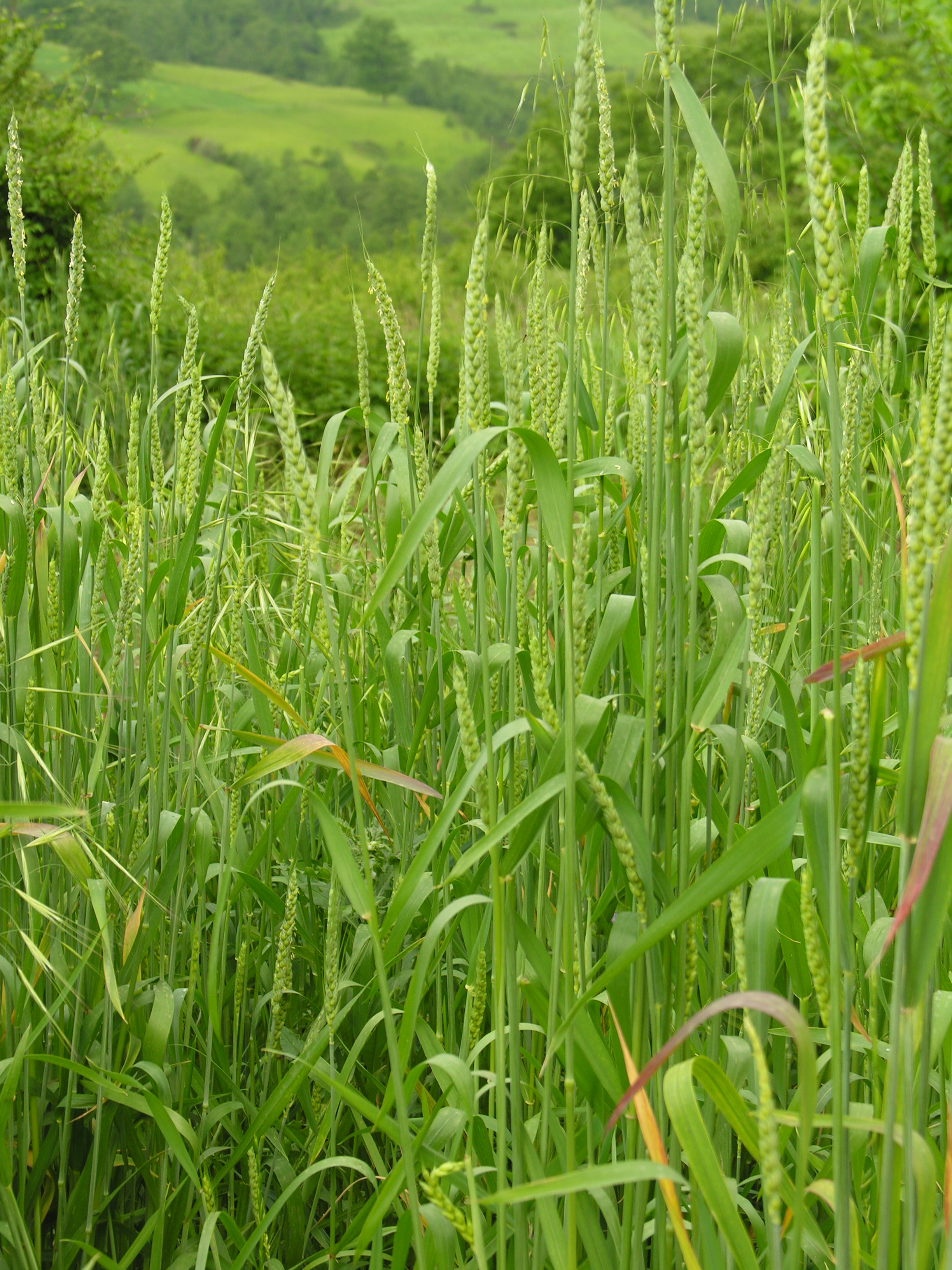
The wheat still exists nowadays thanks to the persistence of local farmers and especially association Tempa Del Fico of Angelo Avagliano who dedicates his life to the cultivation and conservation of this special and endangered wheat. Carosella wheat once cultivated in many parts of the Cilento and Southern Italy (in the Pollino in Basilicata and Calabria) is a type of wheat characterized by having a plant that is at least one meter high. Its name probably derives from the popularization of the term ‘cariosside’, which indicates the dry grain of wheat still covered by the husk (the first leaf coating) at the base of the inflorescences (spikelets) typical of Gramineae. In fact, this grain is so ancient that its first production seems to date back to Roman who cultivated it in the numerous farms scattered in the Cilento area.
Over the centuries this wheat was gradually shelved to make way for other types of grain that more suit to the characteristics of mechanical threshing and other agricultural machines.
A typical feature of this seed is its ability to give life to a plant as a 'tillering' phenomenon that from a single grain of corn, through the formation of secondary stalks from sprouts the main stem, draw lush clumps origin, capable of carrying dozens of spikes and hundreds of beans. The roots, however, sink into the ground with thousands of ramifications whose overall length is several tens of meters.
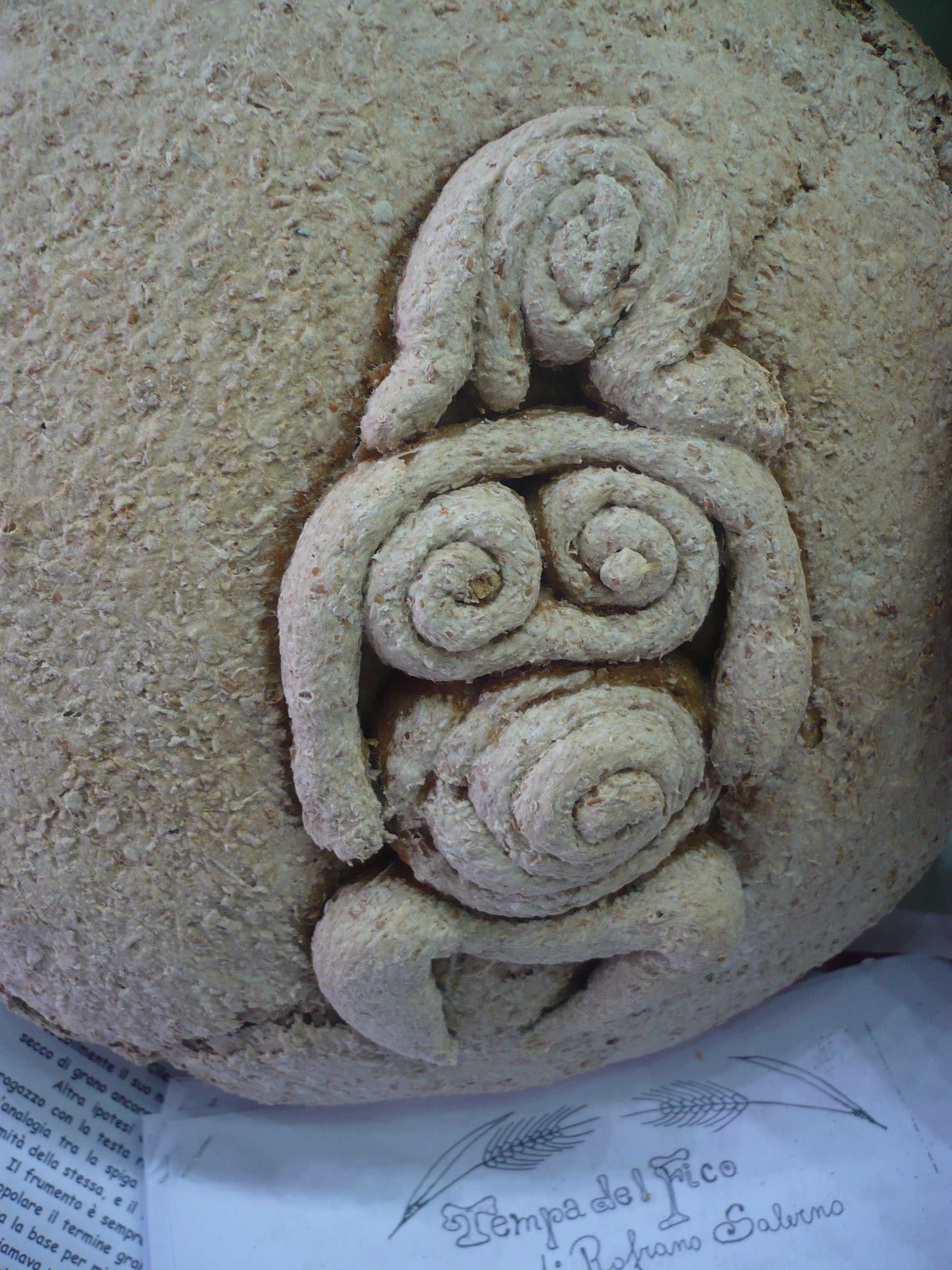
Carosella flour can be defined as a soft wheat with a discrete content of gluten and semolina (characteristic precisely of only durum wheat) and with a balanced content of starch which makes it versatile for bread making.
A written record of this ancient grain is found in some documents published in Paris in the 1700s.
Tempa Del Fico association, located in Valle di Pruno (in the heart of Cilento) and dealing with the preservation of culture and cultural biodiversity, is recovering and making other crop seeds of ancient grains such as saragolla, solina and risciola in addition to carosella.
Photo gallery
Video
Notes
La scheda è stata possibile realizzarla grazie ad Angelo Avagliano dell' Associazione Tempa Del Fico