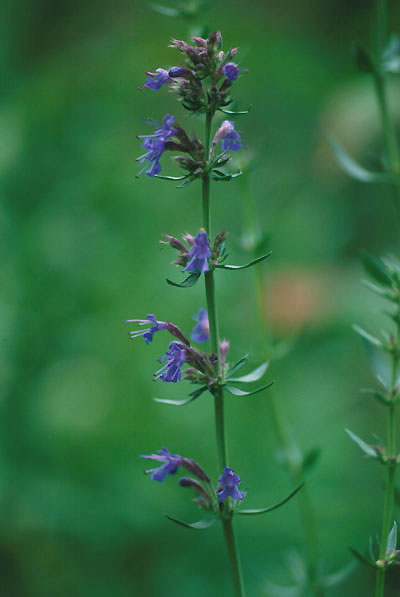
Hyssop, scientific name Hyssopus officinalis L. is an aromatic plant of the Lamiaceae family mentioned in the sacred and classic texts for its therapeutic characteristics. Today it is cultivated on an industrial scale both as an aromatic plant and for its medicinal properties. It is an ancient herb cultivated for its therapeutic properties (expectorant, digestive) as well as the usages in the kitchen.
It grows wild mainly in mountain areas up to 1,200 meters above sea level. In the province of Salerno it is located along the slopes of the Lattari Mountains.
The word ‘hyssop’ can be traced to both the Greek ‘hyssopos’, which means ‘look at the arrow’, or the Israelite ‘esob’, which means ‘oregano’, although there is little doubt that the hyssop is the same as described in Antico Testamento.
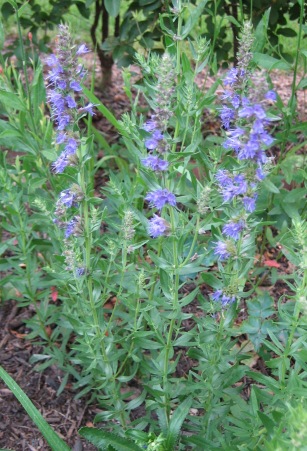
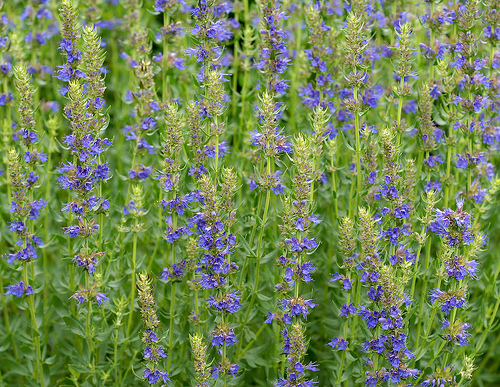
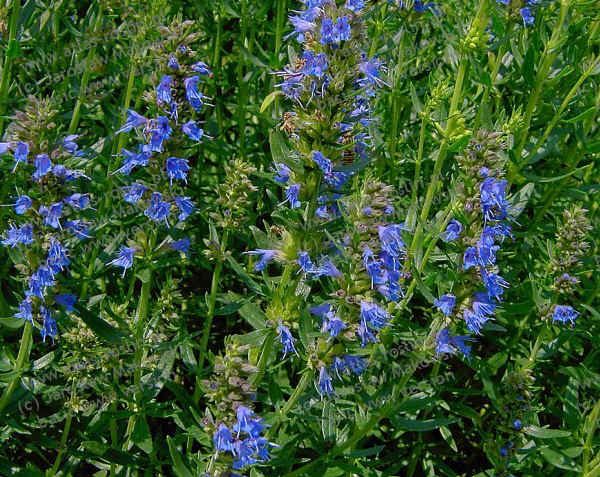
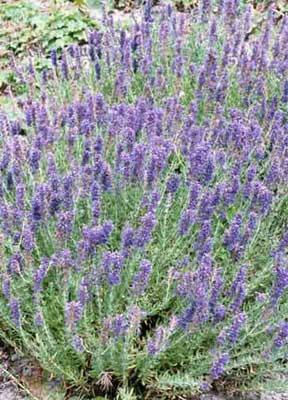
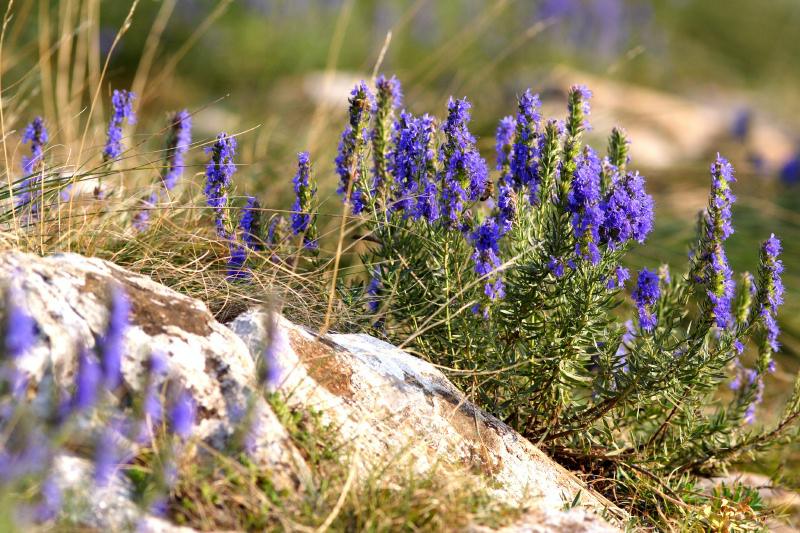
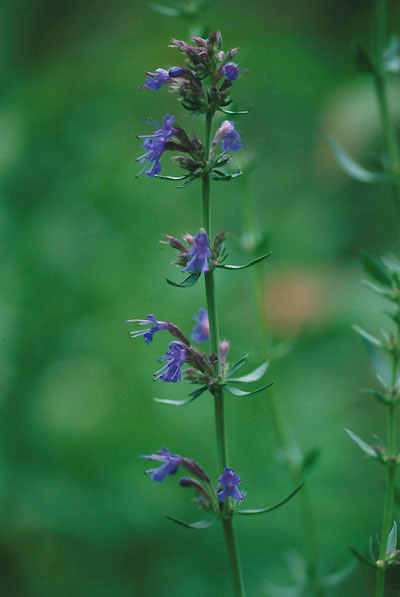
Hyssop is a perennial herbaceous plant, bushy made up of erect stems, slender, tall up to 60 cm. The leaves are small, with a nice deep green colour and raised ribs. The flowers are small, bluish, while the fruit contains one black and wrinkled seed.
Photo gallery
Notes
“Monitoraggio del patrimonio di biodiversità. Analisi per la gestione delle risorse ambientali per la conservazione della biodiversità” , Agriconsulting per il Parco Regionale dei Monti Lattari