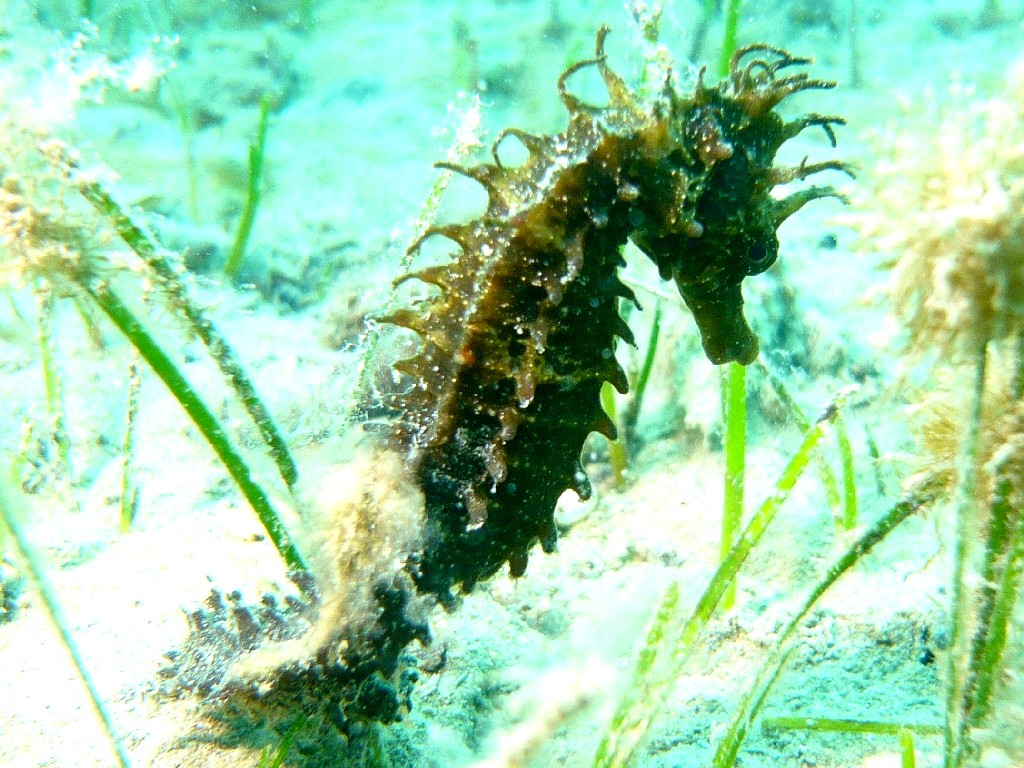
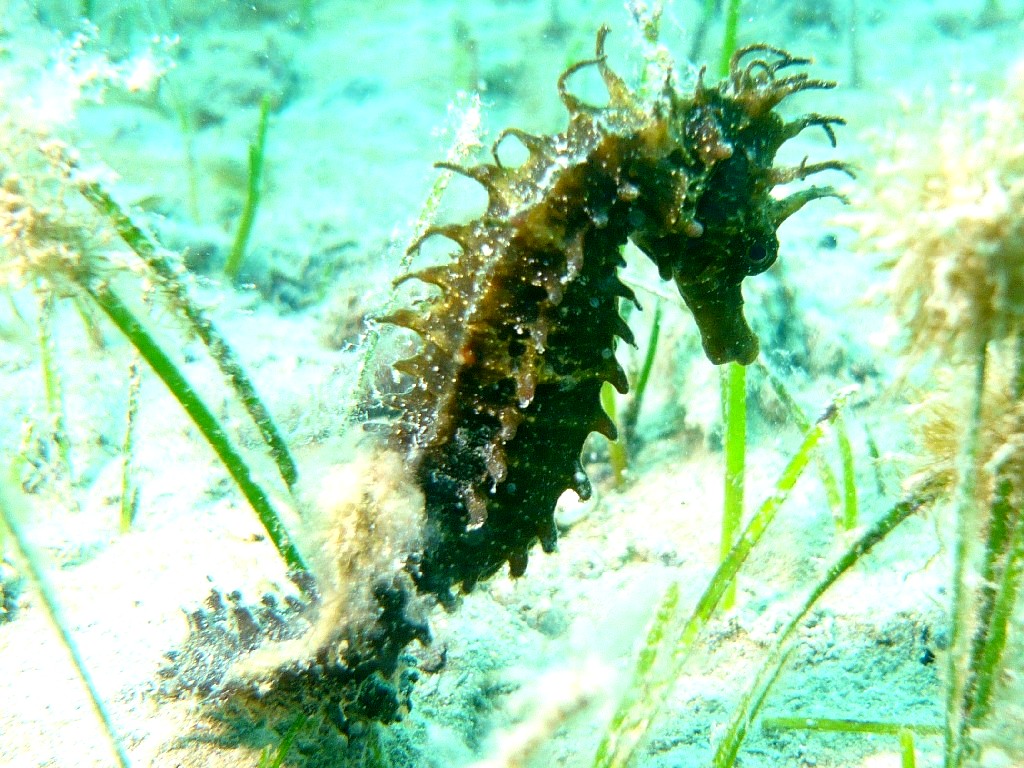
The long-snouted seahorse is a saltwater fish belonging to the Syngnathidae family, common in the Mediterranean Sea. In the province of Salerno it is located along the coast. It’s a rare and fascinating marine creature, often found in the vicinity of seaweed, Posidonia oceanica, and zostera clinging with its tail.
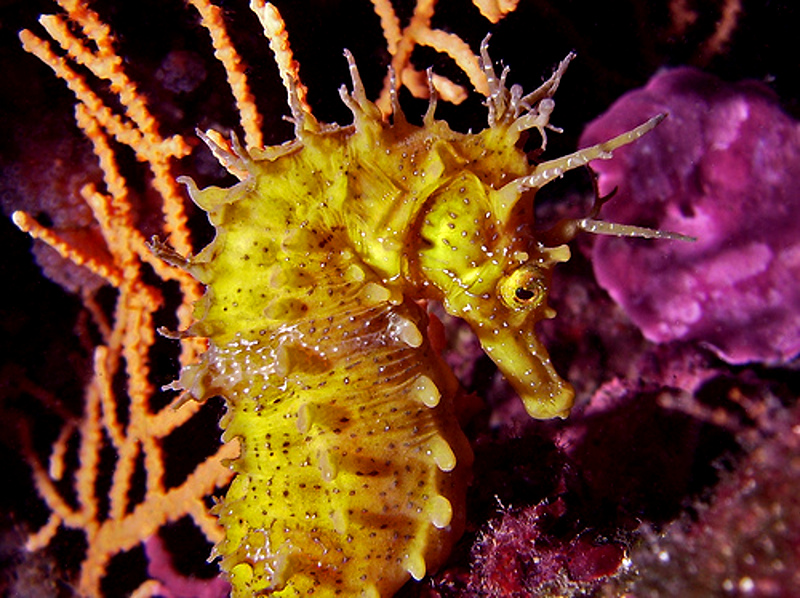
The skin is yellow, sometimes brown or reddish, with irregular white bands. It reaches a maximum length of 15 cm. It is an ovivipary species. The female, after fertilization, lays eggs in the pocket on the male's abdomen. The male will hatch the eggs for 2-5 weeks until they hatch, when offspring already formed will leave the paternal belly. The species has omnivorous diet: it feeds on small fish and algae.
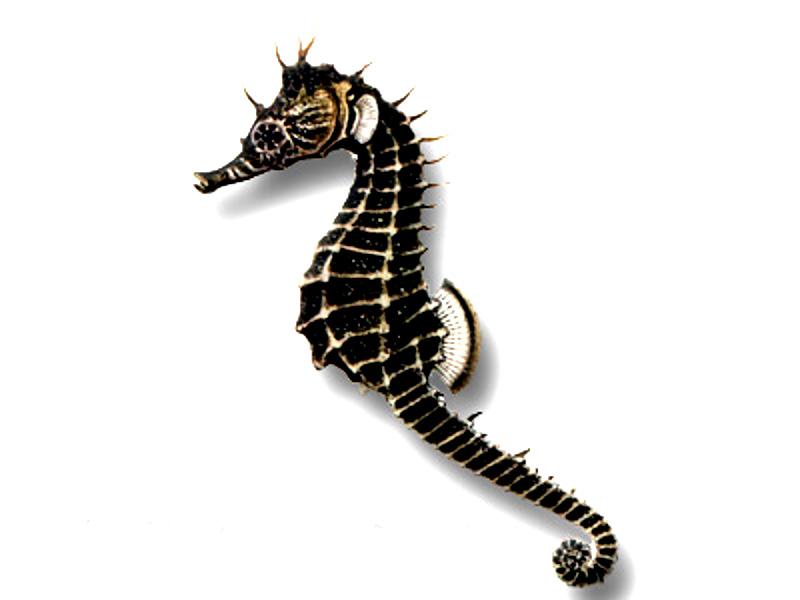
The tiny skeleton, made up of bony plates, supports the vital organs of the thin animal that moves on the water using tiny fins. The dorsal fin is the most important, enables the horse to move rather quickly and precisely. The side fins, positioned just behind the head that resembles that of a small horse, are used for moving and more complex movements.
A long snout and small mouth forced him to a very limited diet and specific. A mouth devoid of teeth that sucks the small prey.
The body is usually made up of about fifty bony rings. The tail, major organ for seahorse, is prehensile. This allows the animal easy anchoring to the seabed. Particular habitats for with this cute and fragile animal are shallow waters and coastal waters with weeds or debris classic prairies of Posidonia oceanica, typical of many areas of the Mediterranean.
In recent years the presence of these beautiful animals has become rarer to the point of considering in most areas disappeared or at least endangered.
The seahorse is also present in the mythology of the Greeks and Romans. It is a mythological animal that appeared in Poseidon's parade, half-horse, half-fish. Hence the name Hippocampus composed of the two Greek names Hippos (horse) and Kampos (monster).
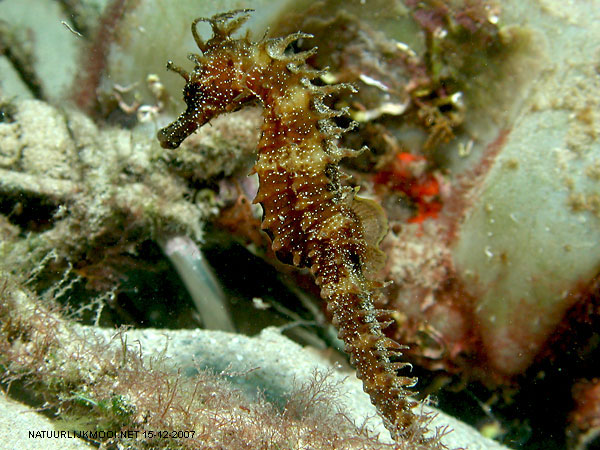
Photo gallery
Video
Notes
Egidio Trainito, Atlante di flora e fauna del Mediterraneo, 2004, Milano, Il Castello, 2004