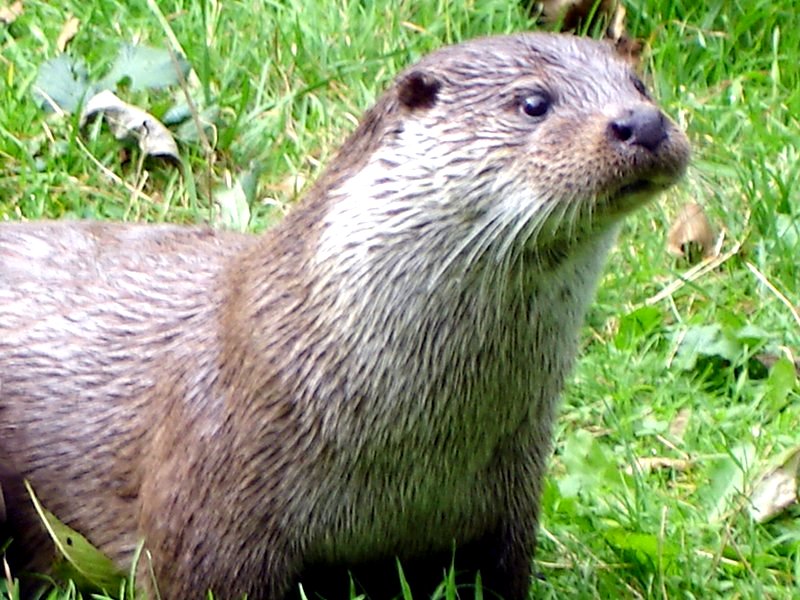
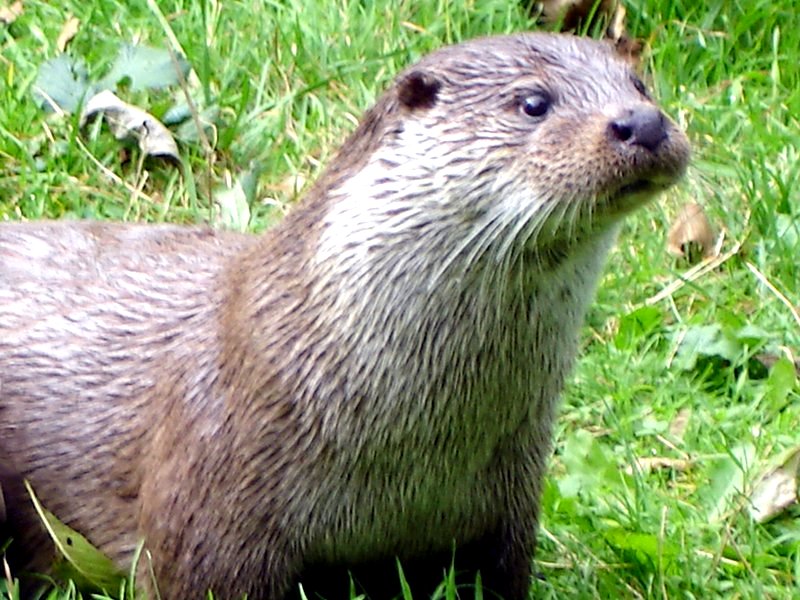
"Being unknown and ignored by most people, being confused with a non-native rodent origin such as nutria, being considered by many now close to extinction in Italy, the European otters, or Eurasian otters, still populate the rivers of the South, representing some extent an environmental quality brand for the region, particularly for the province of Salerno and the Park of Cilento and Vallo di Diano. The poor perception of the presence of this species and the lack of knowledge of conservation issues are a risk to their survival.
The European otter is a medium-sized mammal (also reaches 120 cm, including the long tail) that finds its ideal habitat along the rivers and the lakes in Europe and Asia. In Italy it was originally spread throughout the peninsula, but is currently only present along the waterways of Basilicata, Campania, Calabria, Puglia (Picentino, Calore lucano, Sele, Tanagro, Calore irpino, Ofanto, Alento, Mingardo, Bussento, Bradano, Basento, Cavone, Agri, Sinni, Noce and Lao Rivers), with the populations in Lazio, Tuscany, Abruzzo and Veneto having faced extinction.
It is an excellent swimmer, and its diet consists almost exclusively of fish. It has an intense brown fur at the top and lighter in the lower part, especially on the throat. The body is elongated, while the tail is long and tapered. The muzzle is stocky and covered with moustaches. The ears are very small. The legs are short with webbed feet, ideal for swimming. Often it may travel as far to the coastal areas, when there is shortage of food.
The otter is a predator and it feeds mainly on fish (usually prefers the eels and trout), but also shrimp, other invertebrates, and even waterfowl. Its prey on land are voles, rabbits and other small mammals. Generally it is nocturnal, and it spends a lot of time in the water.
The breeding season usually lasts from February to March, but the pair outside of this period are not uncommon, so the little ones can come up during the whole year. Gestation lasts nine weeks and the female gives birth to 2 to 4 offspring which are born with closed eyes. It becomes sexually active just before the third year of age. The adults live alone or in small family groups, but the females keep the offspring with them for a long time.
The otter lives only in unpopulated areas and is very sensitive to pollution. It was declared a threatened species in 1977 in Italy. The dialect name of the otter in Campania is ‘utria’, now obsolete but still present in the memory of the elderly people of the Cilento and in some places of the town's name, such as ‘Valley of ‘utria’’, a tributary of the river Mingardo in near Laurito. The otter, an excellent presence of the environments of the running waters and the main emergency fauna of the Park of Cilento, is among the most threatened mammals with extinction at the national level, distributed in a restricted area of the southern regions of the peninsula. The population of otters that survives in southern Italy and in the Cilento Park sums up many biological, ecological, environmental, cultural, and historical meanings and issues, deeply interrelated in a landscape and in a cultural context that expresses the complexity, diversity, richness and contradictions.
The causes of the rapid decline of the otter population in Europe and in Italy are due in large part to the tumultuous post-war development, in particular the growth of industrial activity and consumption that began in the 60s, and the processes of degradation of river habitat that have accrued, triggered by the intense urbanization of the territory and the expansion of intensive agriculture in a context where environmental culture was not yet formed, and in the absence of protection and prevention legislation. Since the otter is a predator with high space requirements, closely linked to predation relationships with many vertebrate species, sensitive to human and environment activities, it can be defined as an ‘umbrella’ species, which is a species whose conservation, implemented through studies of its ecology and redevelopment plans and protection of the environment in which they live, can have a positive spill over effect for many other species in the ecosystem level. At the same time its appeal to the public as a flagship species, or a species that favours consensus and availability of resources for research, conservation and environmental protection.’
Text taken from: Lutria Cilento. Scientific dissemination and environmental education project organized by Romina Fusillo, Manlio Marcelli, LUTRIA snc.
Photo gallery

Video
Notes
Spagnesi M., De Marinis A.M. (a cura di), Mammiferi d'Italia - Quad. Cons. Natura n.14 , Ministero dell'Ambiente - Istituto Nazionale Fauna Selvatica, 2002
Lutria snc: "Lutria Cilento, progetto di divulgazione scientifica ed educazione ambientale"