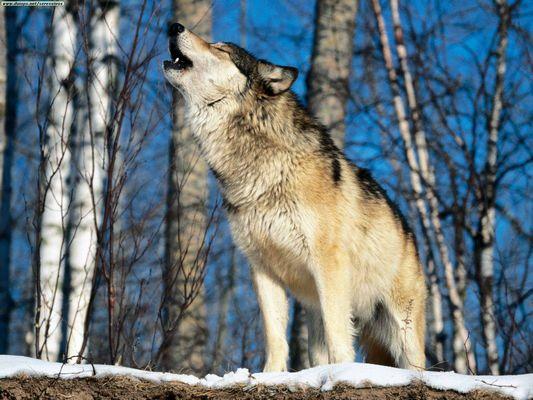
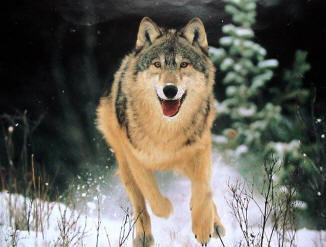
The gray wolf (Canis lupus)
The preferred habitat of the wolf is characterized by plane forest areas and mountain forests.In the province of Salerno it is present in the National Park of Cilento and Vallo di Diano. Thanks to laws of protection, the number of wolves has slowly grown throughout Italy. A wolf has an average hunting area of 100 km².
Once the wolf was the most widespread predator on earth. Able to withstand extreme temperatures and quite adept at hunting prey of different sizes.
The wolf can survive anywhere where its prey are sufficiently numerous.
The size of the wolf vary depending on the subspecies, but generally this animal has the size of a large dog: the males are on average 135-170 cm long, while the height at the withers ranges from 45 to 90 cm and weighs between 45 and 55 kg, larger species can reach up to 65 kg. The females are smaller.
The wolf is an animal very durable and can cover more than 30 km on a steady trot at a speed of 6 -10 km / h. The sense of smell is the most developed capacity of the wolf, but also hearing is exceptional: it can hear the howling of his peers at a distance of more than 16 km.
The wolf has jaws that can exert a pressure of more than 100 kg per cm2.
The function of each wolf is arranged within a herd, with a strongly hierarchical social structure.
The herd is led by two individuals who are at the top of the social pyramid, the alpha male and alpha female. The alpha pair (of which only one of the two components can be the "head") has more freedom than the rest of the pack: the alpha wolfs do not give orders to the other wolves; but, have the freedom to choose what to do, when to do it and where to go. The rest of the pack, which has a strong sense of community, usually follows them.
Although most of the alpha pairs are monogamous, there may be some exceptions: an alpha individual may prefer mating with a wolf of minor importance in the social scale, especially if he has family ties that are very close with the other alpha ( brother or sister, for example). It is observed that if a specimen alpha dies, the partner does not often form a new pair with another wolf, but is left alone to lead the pack. But it can also happen that the wolf or the wolf widow take a new mate.
Usually, only the alpha pair is able to raise a litter (the other wolves of the pack can breed, but usually do not have the resources to bring the cubs to maturity). All the wolves of the pack assist in the growth of the puppies.
The size of the pack may change with the passage of time according to different factors, such as habitat, the individual personality of the wolves, or the amount of food available. Flocks may contain 2 to 20 wolves.
The wolf packs hunt cooperatively in order to be able to catch any large herbivore, lonely wolves are limited to the hunting of small preys because they are incapable of attacking large animals.
The wolf is a protected species but remains at high risk of extinction, and should be protected with a conservation strategy. The National Park of Cilento and Vallo di Diano has launched a project to monitor the status of the wolf population.
Photo gallery
Video
Notes
Cecere F.(Ed.), 1996 - Atti del Convegno “Dalla parte del Lupo”. Atti e Studi del WWF Italia, n. 10. 1-160.
Duccio Berzi e Giovanni Valdrè, “Il lupo è vicino”, dicembre 2002
E Randi, V Lucchini and F Francisci “Allozyme variability in the Italian wolf (Canis lupus) population”.